
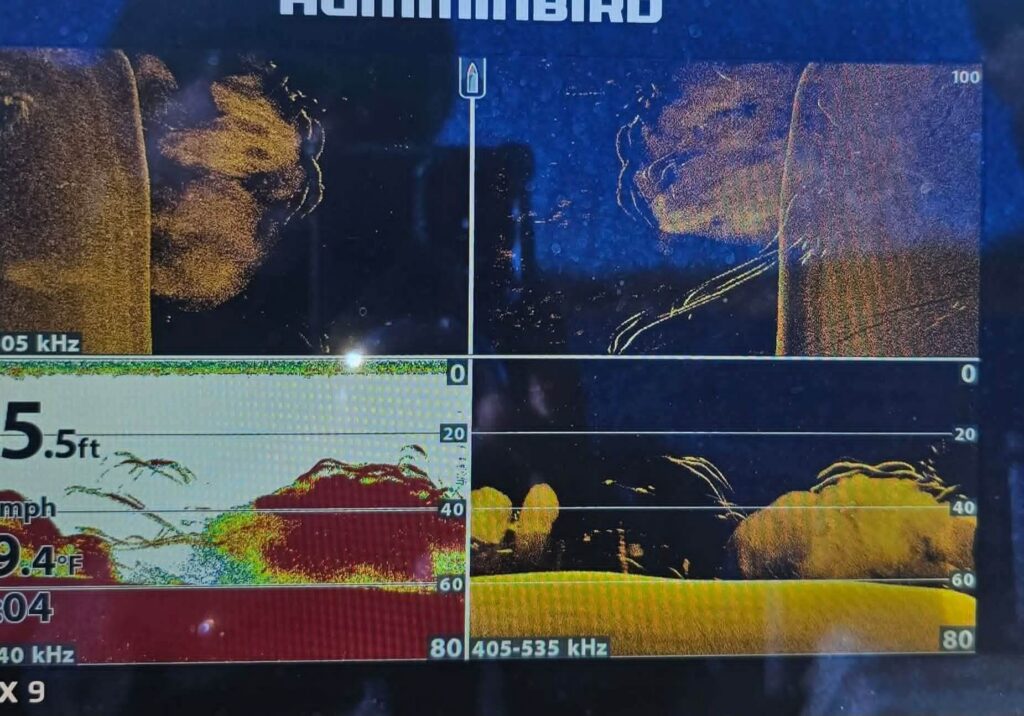
Things really do change once you start trusting your graphs—and it’s not just in your head.
Here’s why:
1. You stop fishing “blind”
Instead of guessing or running spots based on history, you’re making decisions based on what’s actually under the boat right now.
2. Confidence leads to patience
When you see fish on your graph, you’re way more likely to slow down and work them properly instead of leaving too soon. That confidence alone catches more fish.
3. You start recognizing patterns
Over time, you learn what fish look like when they’re:
- Active vs inactive
- Suspended vs bottom-oriented
- Chasing bait vs ignoring it
That’s when you stop just “seeing stuff” and start interpreting behavior.
4. Better adjustments in real time
If fish aren’t reacting, you know instantly—and can switch:
- Speed (slow trolling vs fast trolling)
- Depth
- Bait type
Instead of wasting hours doing the wrong thing, you adjust in minutes.
5. You eliminate dead water
Not all bait balls hold fish, and not all structure is productive. Your graphs help you avoid wasting time and stay around high-percentage areas.
Bottom line:
Trusting your electronics turns fishing from guessing into decision-making. The more you trust what you see, the more efficient—and consistent—you become.