Here’s an overview of the history and management of striped bass on Beaver Lake in northwest Arkansas – how they got there, how they’ve been managed over time, and why this lake is known today as one of the state’s premier striped-bass fisheries.
🐟 Introduction of Striped Bass to Beaver Lake
Beaver Lake is a 28,000 acre reservoir on the White River, completed in 1966 by the U.S. Army Corps of Engineers.
Striped bass (Morone saxatilis), a species originally native to coastal rivers and estuaries, do not naturally reproduce in Beaver Lake because the conditions needed for their eggs to drift and hatch (strong downstream current over suitable substrate) don’t exist there.
Therefore, the Arkansas Game and Fish Commission (AGFC) started a stocking program soon after the lake’s creation to establish and maintain a fishery. According to historical reports, stripers have been stocked in Beaver Lake for several decades, with stockings of juvenile fish or fingerlings happening annually.
🐟 Stocking and Management
AGFC targets healthy striper populations by stocking up to ~ 300,000 striped bass fingerlings per year in Beaver Lake, along with occasional stockings of hybrid striped bass.
The stocking is designed to support a trophy fishery – that is, fewer fish but larger average sizes – rather than trying to establish a self-sustaining wild population.
Because they don’t reproduce naturally here, ongoing stocking is essential to keep the fishery healthy.
Hybridization History
In the late 1970s, researchers documented suspected natural hybridization between striped bass and native white bass in Beaver Lake, suggesting some hybrid striped bass appeared even without being stocked. However, these were first-generation hybrids and weren’t evidence of a self-sustaining mixed population.
🐟 Why Beaver Lake Makes Great Striper Fishing
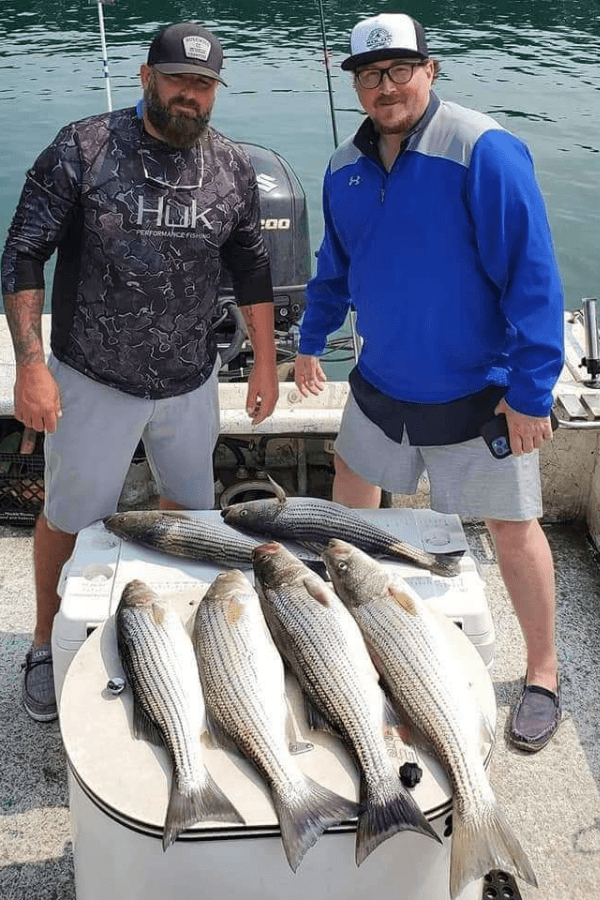
The lake has abundant shad forage (gizzard and threadfin shad) – important prey that help stripers grow fast and reach large sizes.
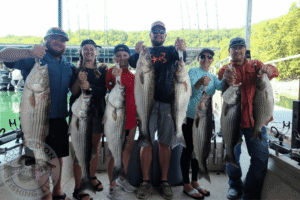
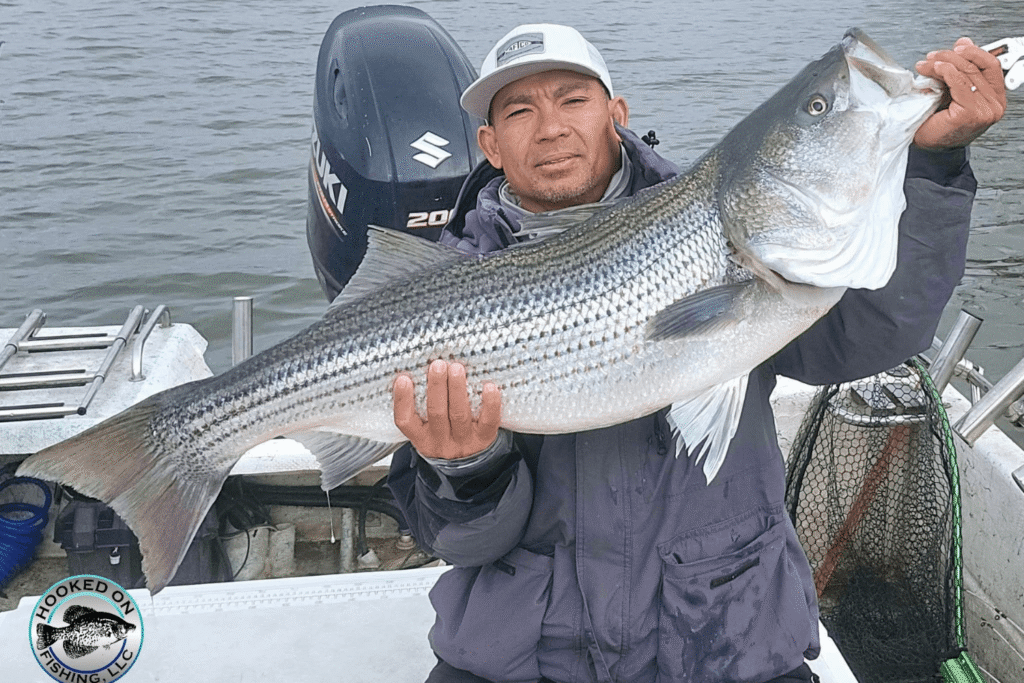
Because of deep, cool water and plentiful food, Beaver produces very large striped bass compared to many other inland lakes; fish in the 30–40-pound range are commonly reported, and even larger fish have been caught.
🐟 Record Fish and Angling Legacy
Beaver Lake has been home to some of Arkansas’s largest striped bass on record. For example, the current state record striper – 64 pounds, 8 ounces – was caught by angler Jeff Fletcher in the tailwaters of Beaver Lake in 2000.
The lake’s reputation as a trophy striped bass destination has attracted anglers for decades, supporting local businesses and tournaments.
📈 Modern Management Updates
Stockings continue to this day, with AGFC collaborating with hatcheries (including occasional hatchery adjustments – such as during COVID-19) to ensure fingerlings are available for Beaver Lake and other Arkansas reservoirs.
The focus remains on maximizing growth and size rather than sheer numbers, making Beaver one of the best U.S. inland striped bass fisheries.